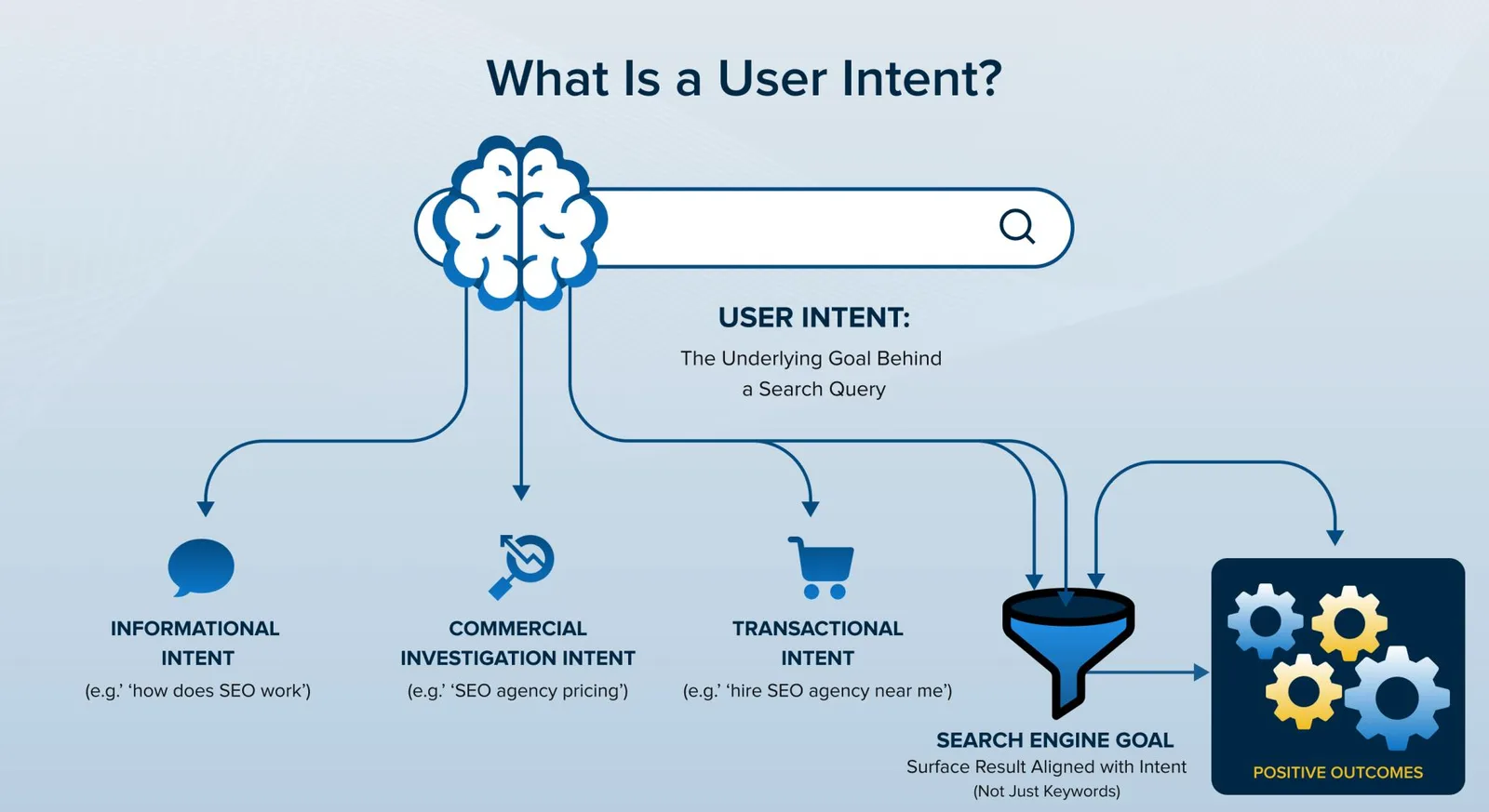
For years, search engine optimization relied heavily on exact keyword matching. Practitioners analyzed search volumes, placed target phrases into title tags, and ensured specific keyword densities across web pages. Today, that playbook is obsolete. Search engines have evolved from syntactic matching systems into sophisticated semantic engines designed to understand the true human purpose behind a query.
In modern search engine optimization, search intent in SEO is the primary ranking factor. Finding high-volume search terms is no longer enough; you must understand why the user typed that query and what format, depth, and resolution they expect to receive. Matching user search intent directly impacts organic visibility, dwell time, and business conversions, making it the bedrock of any successful SEO content strategy.
Key Takeaways
- Search intent matters more than exact keywords because it focuses on what users actually want to accomplish.
- Understand the 4 types of search intent: Informational, Navigational, Commercial, and Transactional.
- Analyze the live SERP to understand what content format and page type Google is currently rewarding for a query.
- Match content format to user intent and create content for different stages of the customer journey.
- Optimize continuously for users, not just crawlers by monitoring engagement and conversions, improving content gaps, and avoiding keyword stuffing.
Understanding Search Intent
What Is Search Intent?
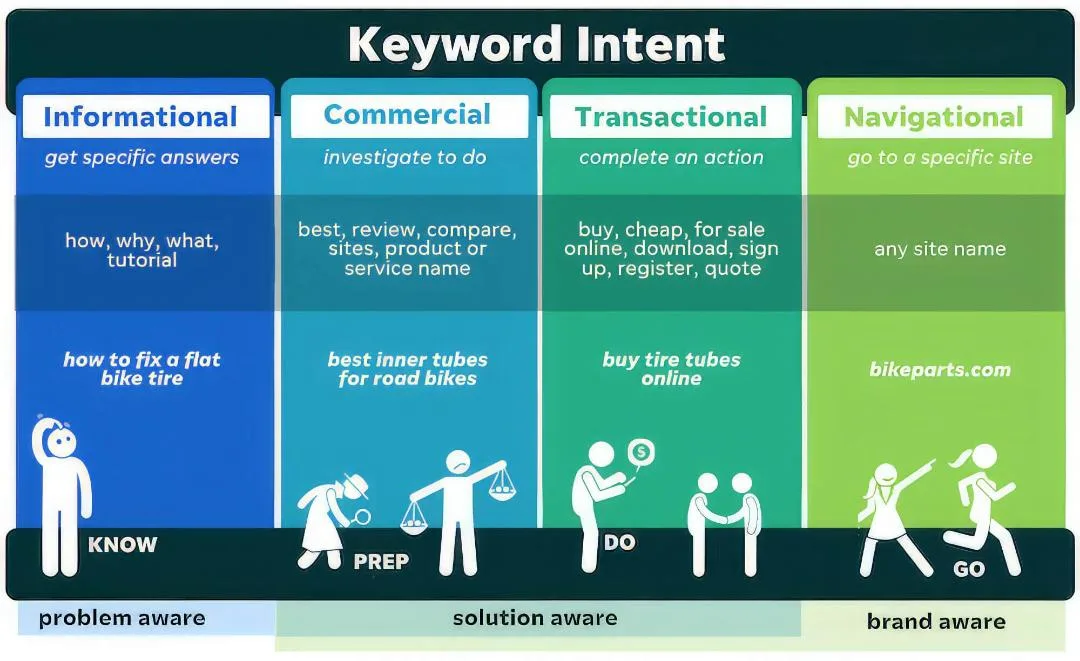
Search intent (often referred to as user search intent or keyword intent) is the underlying objective or goal a user has when entering a query into a search engine. It answers a fundamental question: “Is the searcher looking to learn something, locate a specific brand, compare solutions, or make an immediate purchase?” Recognizing this intent ensures your content solves the user's specific problem rather than simply repeating their query.
Why Search Intent Matters in SEO
Search engine algorithms prioritize user satisfaction. If a visitor clicks a search result and immediately bounces back to find an alternative page, search engines interpret that action as a failure to satisfy intent. Aligning content directly with user expectations increases page engagement, signals deep topical authority, and drives more qualified, high-intent traffic to your website.
Search vs. Intent Keywords
Keywords identify what people are searching for, whereas search intent reveals why they are searching. Focusing strictly on keyword strings without intent analysis often leads to fundamental content mismatches—such as attempting to rank a transactional sales page for a query where users are seeking an educational how-to guide. Modern SEO strategy blends rigorous keyword researchwith comprehensive intent mapping.
The Four Main Types of Search Intent
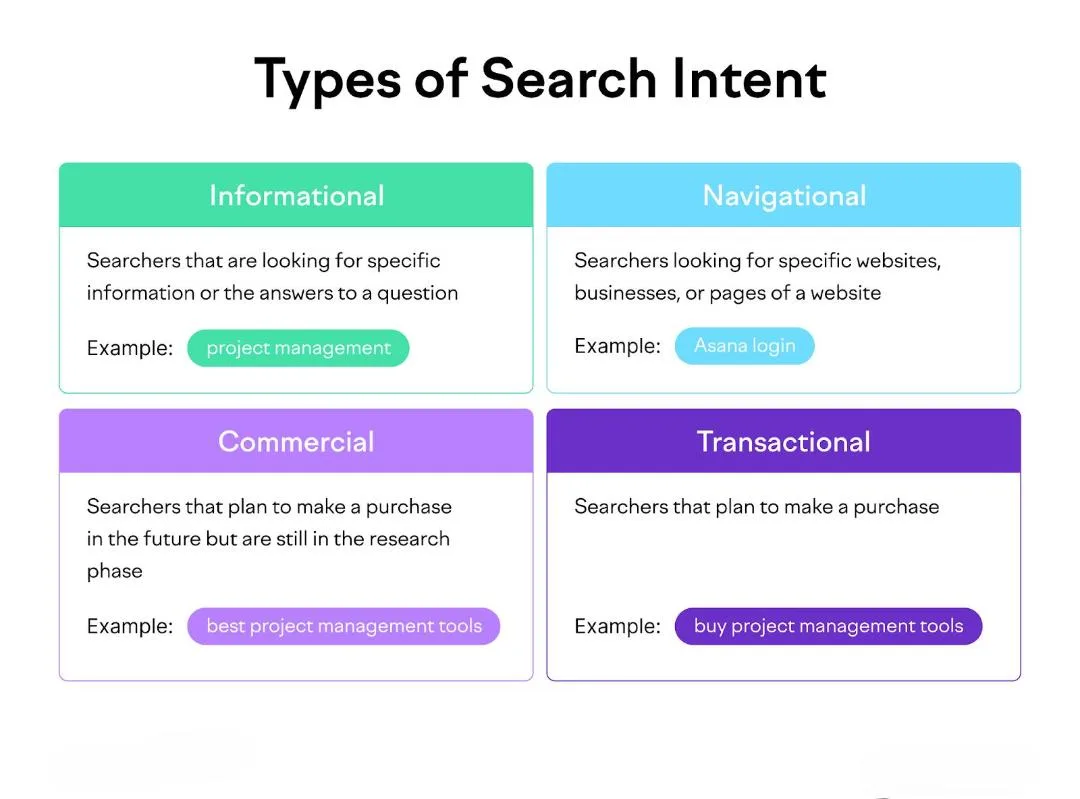
Understanding user intent requires categorizing queries into four universal intent classifications:
1. Informational Search Intent
Informational queries occur when users seek knowledge, definitions, or step-by-step instructions.
Examples: "What is SEO," "how to improve website speed," or "digital marketing strategy guide."
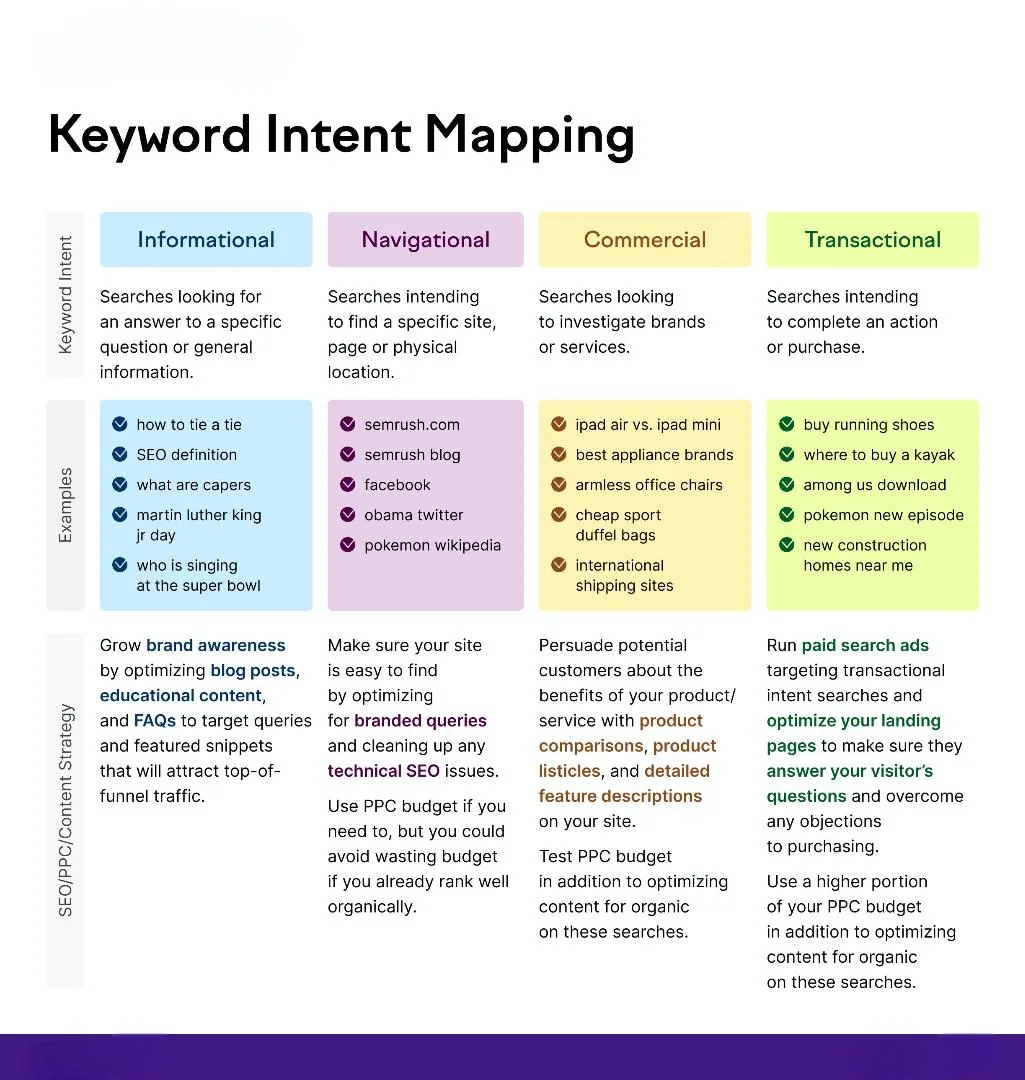
Best Formats: In-depth blog posts, technical explainers, how-to tutorials, FAQs, and industry research reports.
2. Navigational Search Intent
Navigational queries occur when users want to locate a specific brand, login portal, or direct webpage.
Examples: "Google Analytics login," "Unexus AI contact," or "Semrush dashboard."
Best Formats: Clean website architecture, optimized brand landing pages, and structured schema markup that helps users reach their destination quickly.
3. Commercial Search Intent
Commercial queries occur when prospective buyers research solutions, products, or service providers before making a financial commitment.
Examples: "Best enterprise SEO tools", “search intent marketing”, "HubSpot vs Salesforce," or "top digital marketing services in UAE."
Best Formats: Unbiased comparison matrices, in-depth product review guides, feature breakdowns, and third-party verified case studies.
4. Transactional Search Intent
Transactional queries represent high-intent searches where the user is ready to complete an immediate action, buy a product, or hire a provider.
Examples: "Hire digital marketing agency," "book SEO consultation," or "buy CRM software."
Best Formats: High-converting service pages, product catalogs, clear pricing tables, and frictionless consultation booking forms.
How to Identify SEO Search Intent Behind a Keyword
Analyze the Search Query
Examine the syntax and phrasing of the target keyword. Modifiers and linguistic structures often reveal intent immediately. Queries containing interrogatives (who, what, how) indicate informational intent, while terms like "top," "best," or "review" clearly signal commercial evaluation.
Study the Current Search Results (SERP Analysis)
The search engine results page (SERP) is the clearest indicator of intent. Search algorithms continuously test different page types to see what satisfies searchers. If the top ten results for a target phrase are detailed instructional articles, attempting to rank an e-commerce category page for that term will almost certainly fail. Analyze the winning formats, headings, and layouts currently ranking.
Look for Search Intent Modifiers
Incorporate intent modifiers into your keyword mapping process:
- Informational Modifiers: How, what, guide, tutorial, examples, ideas.
- Commercial Modifiers: Best, top, comparison, review, vs, alternatives.
- Transactional Modifiers: Buy, coupon, pricing, hire, order, consultation, service near me.
Why Keyword Matching Alone Is Not Enough
Keywords Do Not Always Reveal the Full User Need
Short-tail queries often harbor ambiguous or multi-faceted intent. A search for "marketing automation" could mean the user wants a technical definition, is looking for a software platform, or needs implementation best practices. Without contextual depth, a page targeting that keyword will likely fail to satisfy the searcher's underlying objective.
Content Can Rank for Related Searches
Modern search engines evaluate semantic relationships and topical completeness. A single comprehensive, well-structured guide written with clear user intent in mind can naturally rank for hundreds of related long-tail queries without needing repetitive exact-match phrases shoehorned into every paragraph.
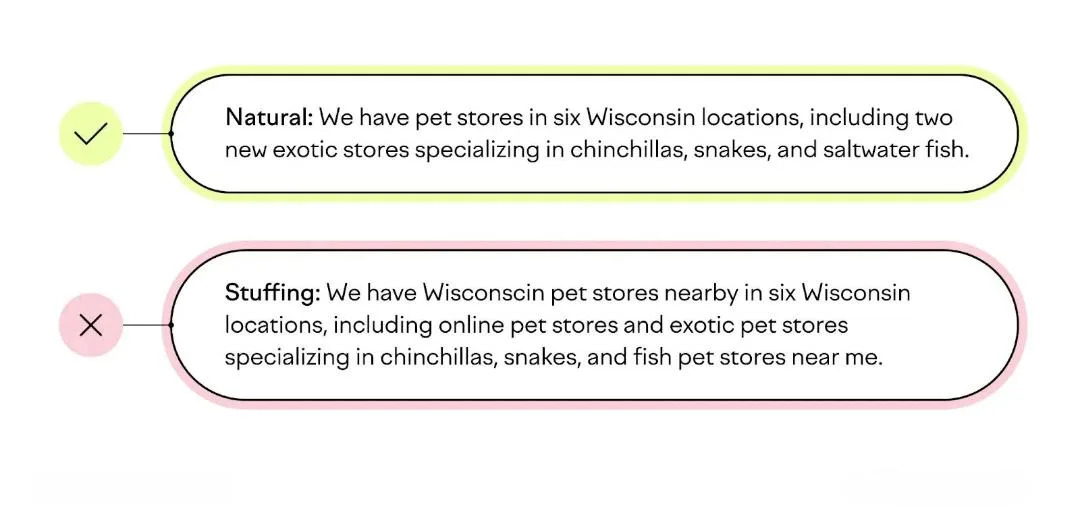
Keyword Stuffing Can Hurt Content Quality
Forcing repetitive keywords into content creates awkward phrasing, frustrates users, and directly violates search quality guidelines. Modern optimization prioritizes natural readability, authoritative insights, and technical clarity over rigid keyword counts.
How Search Intent Improves SEO Content Strategy
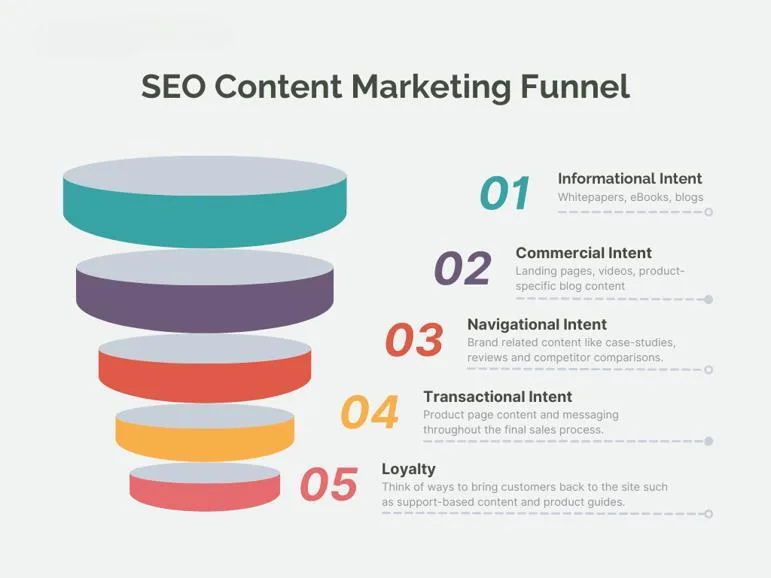
Create Content for Different Stages of the Customer Journey
Organizing content around user intent ensures your digital ecosystem supports buyers at every phase of the funnel:
- Awareness Stage: Educational articles solving initial questions and defining industry concepts (Informational)
- Consideration Stage: Solution comparisons, feature tear-downs, and capability guides (Commercial).
- Decision Stage: Transparent service offerings, client case studies, and clear contact proposals (Transactional).
Match Content Format to User Intent
Format alignment is essential for high search rankings. If searchers expect a quick reference table, providing an uninterrupted 3,000-word essay introduces friction. Match the format to the query:
- Quick calculations or steps require structured lists or tables.
- Broad theoretical questions require comprehensive deep-dives.
- Service requests require streamlined, credible landing pages.
Build Topic Clusters Around User Needs
Strengthen topical authority by building topic clusters linked to central pillar assets. For example, an authoritative pillar guide on digital marketing strategy can be supported by granular informational sub-articles covering keyword research, conversion tracking, and channel attribution, all linking back to primary commercial service pages. Businesses that want to improve their organic visibility can use a search engine optimization strategy focused on both relevant keywords and the intent behind the searches
How to Optimize Existing Content for Search Intent
Identify Current Search Intent
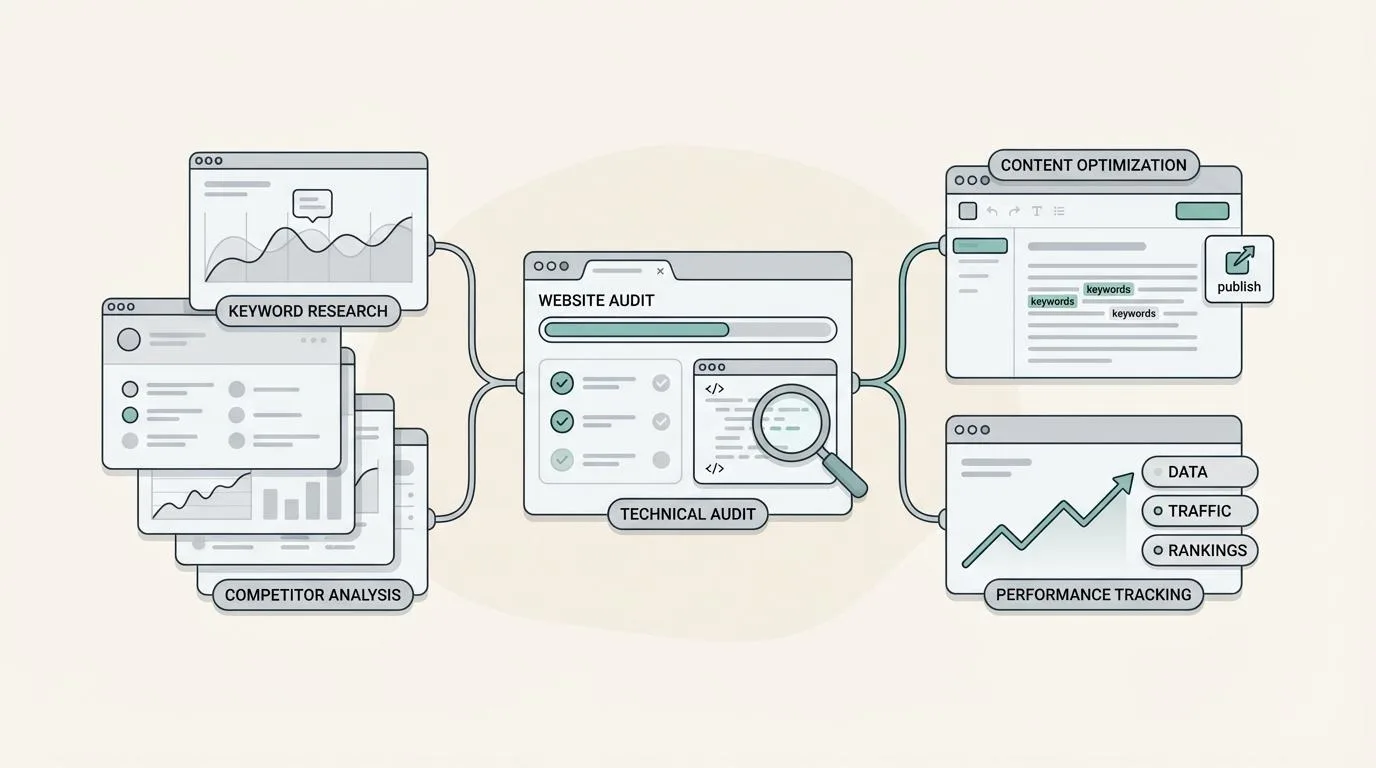
Regularly audit underperforming web assets. If a page ranks on page two or three despite strong domain metrics, perform a live SERP audit to identify whether search intent has shifted toward alternative formats or deeper technical coverage.
Find Gaps Between Content and User Expectations
Compare your existing page against the top-ranking results. Are competitors providing downloadable templates, pricing comparisons, or worked examples that your page lacks? Identify the unanswered questions searchers have when arriving on your asset.
Improve the Page Without Over-Optimizing
Update heading structures (H2s and H3s) to clearly address user questions. Add visual aids, comparison charts, and concise FAQ sections. Ensure internal links point logically to relevant subsequent steps in the buyer journey while preserving natural, human-focused readability.
Common Search Intent Mistakes in SEO
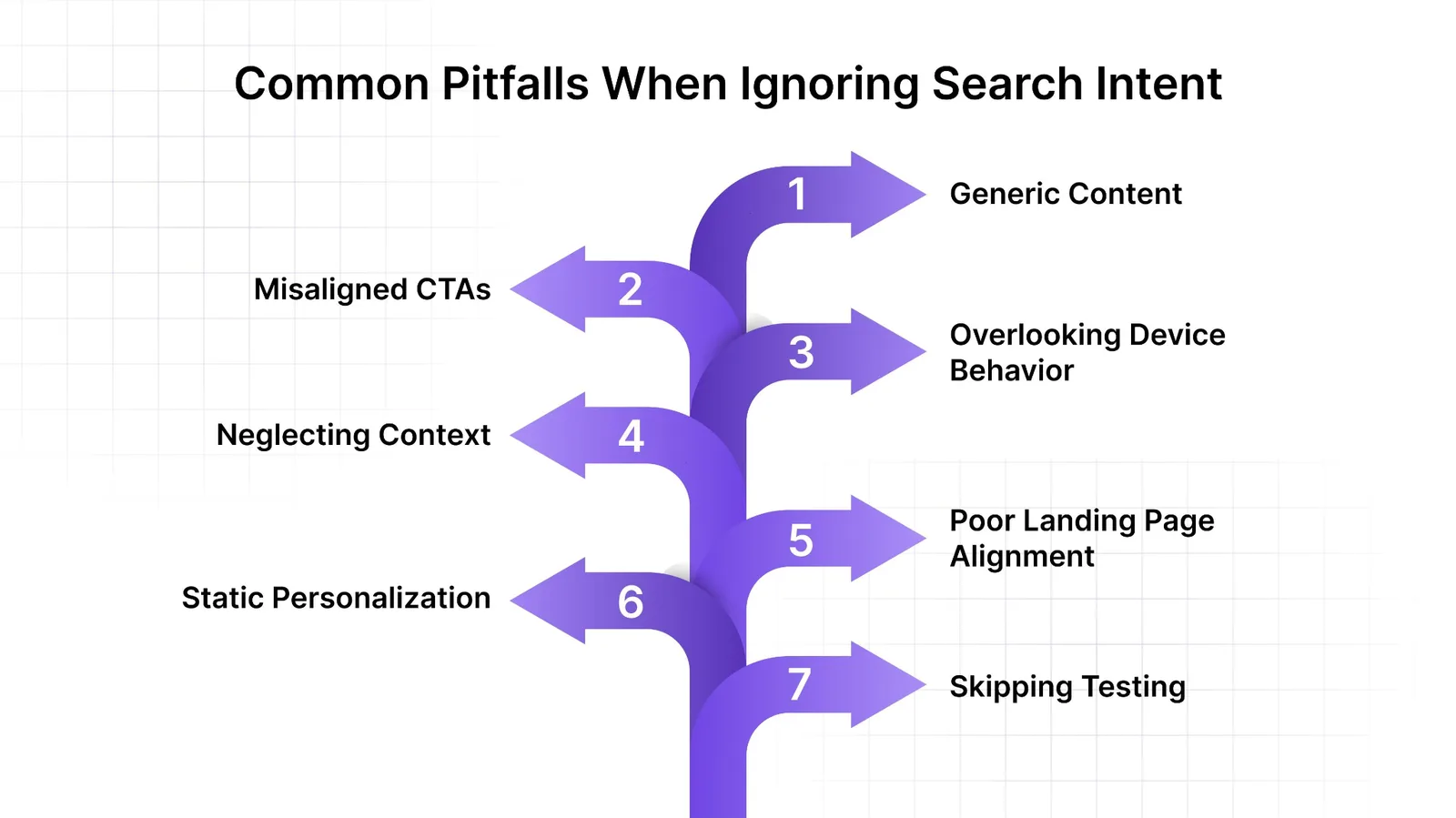
- Chasing Raw Search Volume: Targeting high-volume keywords with zero commercial alignment wastes resources on traffic that will never convert.
- Delivering the Wrong Content Type: Publishing a promotional product sales page for an educational, informational query results in immediate bounces.
- Ignoring Live Search Results: Writing content without auditing the current top ten rankings is guessing rather than executing an SEO strategy.
- Writing for Crawlers Instead of People: Stuffing keywords to manipulate search bots produces disjointed content that fails Google's helpful content and E-E-A-T standards.
Step-by-Step Process to Create Search Intent-Focused Content
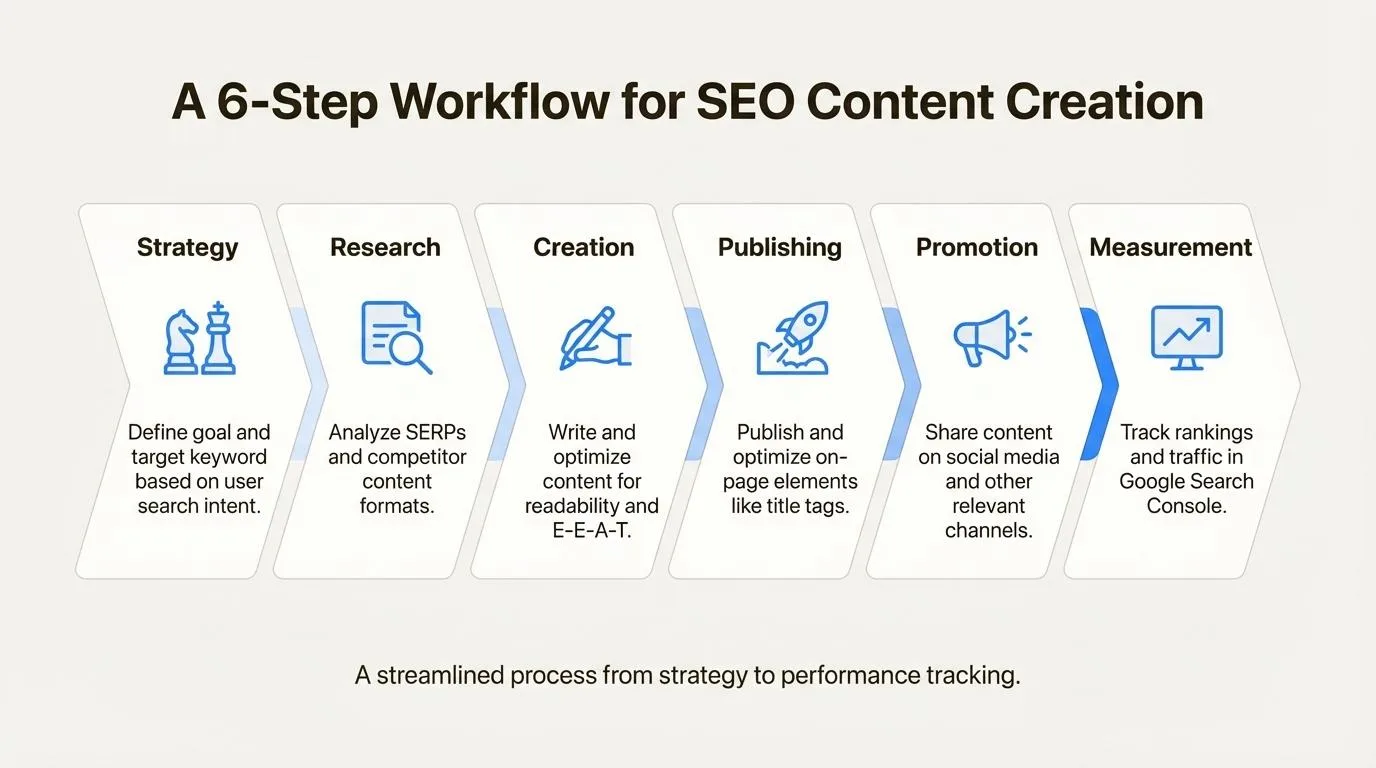
- Step 1: Choose a Relevant Target Keyword: Select search terms that align directly with your core services and business offerings.
- Step 2: Determine the Dominant Intent: Classify the query as informational, navigational, commercial, or transactional.
- Step 3: Analyze the Live SERP: Review the top five organic results to identify winning content formats, media types, and structural patterns.
- Step 4: Create Comprehensive, User-First Content: Develop content that answers the searcher’s core problem faster and more thoroughly than competing pages.
- Step 5: Optimize Naturally: Structure your content with logical headings, semantic terms, clear schema markup, and intuitive calls to action.
- Step 6: Measure and Refine: Monitor click-through rates, average engagement time, bounce rates, and conversions in Google Analytics, updating the page as search behaviors evolve.
How Search Intent Supports Business Growth
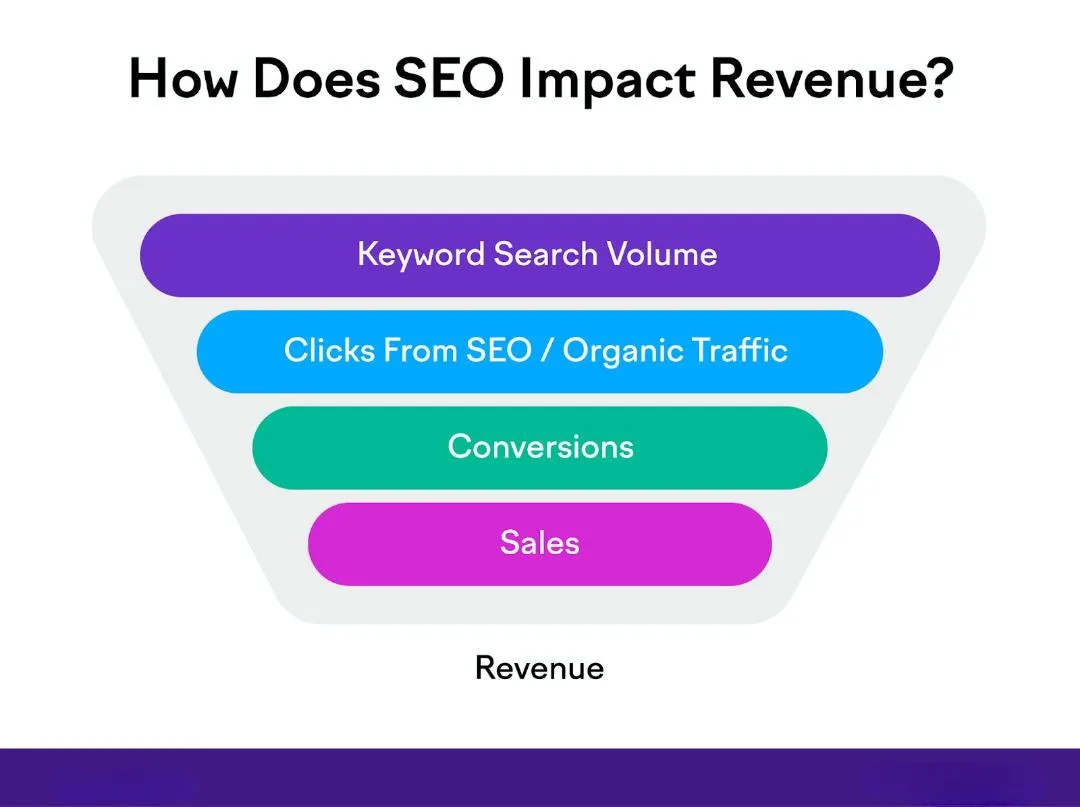
Targeting search intent directly impacts your bottom line. By filtering out irrelevant queries, businesses attract highly qualified prospects who actually need their specific solutions.
When content matches user expectations, bounce rates drop, page engagement rises, and trust is established early in the sales cycle. Strategic internal linking and intent-matched CTAs then guide visitors seamlessly from top-of-funnel educational articles down into bottom-of-funnel conversion pathways, turning organic visibility into predictable revenue.
Final Thoughts
Keywords remain a foundational component of keyword research, but search intent in SEO provides the critical context that determines organic success. By prioritizing why users search over what they type, businesses can build authoritative, helpful, and conversion-focused content assets. In the modern SEO landscape, the brands that win organic visibility are those that satisfy the user’s underlying intent quickly, accurately, and comprehensively.
Frequently Asked Questions
What is search intent in SEO?
Search intent is the primary goal or purpose a user has when entering a search query into an engine, dictating whether they are looking for information, a specific website, product comparisons, or an immediate purchase.
Why is search intent in SEO more important than keywords?
Keywords indicate what users type, but intent reveals what they need. Search engines prioritize results that satisfy user needs, meaning pages that fail to align with search intent will not maintain top rankings regardless of keyword optimization.
What are the four types of search intent?
The four types are Informational (learning), Navigational (finding a specific page), Commercial (researching options), and Transactional (ready to take action or buy).
How to identify search intent for a keyword?
Analyze the linguistic modifiers in the query (such as "how," "best," or "pricing") and inspect the current search engine results page (SERP) to see what content formats and page types are already ranking.
How search intent affect SEO rankings?
Search engines monitor user engagement signals like dwell time and bounce rates. Pages that satisfy user intent retain visitors, signaling relevance and authority, which directly boosts long-term rankings.
How do I optimize content for search intent in SEO?
Match the content format to the query type, address the user’s primary questions within the opening sections, utilize descriptive subheadings, and provide clear next steps tailored to their stage in the buying journey.